
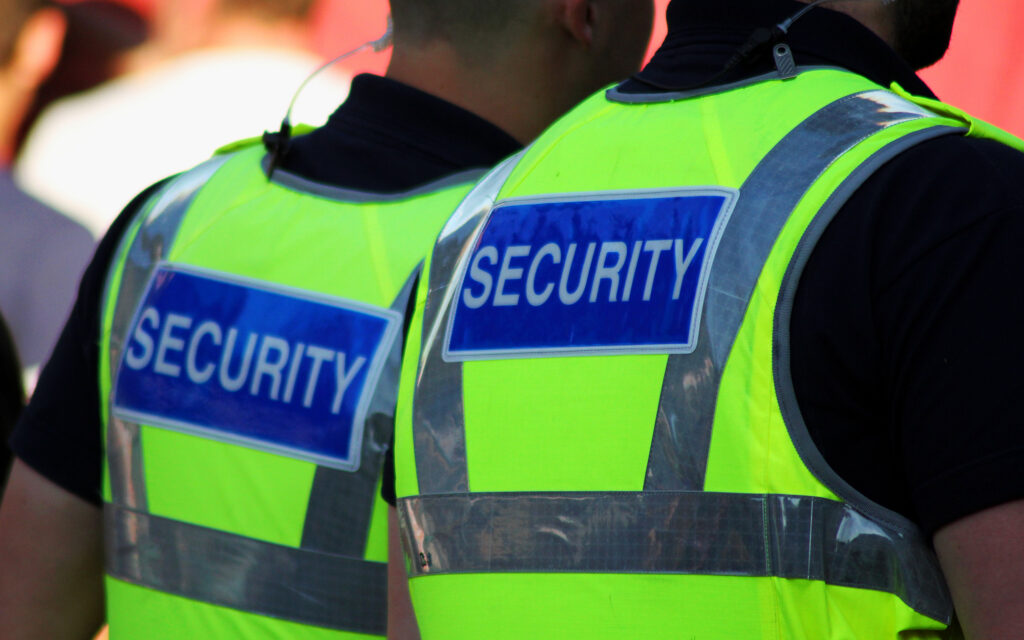
Event Security Planning Checklist: What Every Event Organizer Should Know
Security is about threat assessment, command structure, medical readiness, and having a team that already knows the venue before your guests arrive. Whether you’re running a 500-person corporate event or a 50,000-attendee trade show, the planning process is the same. This checklist walks you through it.
Start With a Threat Assessment, Not a Headcount
The first question most planners ask is “how many guards do I need?” It’s the wrong starting point.
Before you think about staffing numbers, you need to understand the risk profile of your event. Are you expecting high-profile speakers, or VIP attendees? Will your registration desk handle cash? Is there high-value merchandise on the floor? Are there active protests or public controversy tied to your event or guest list?
Each of those factors changes the security equation. An event drawing thousands of attendees at a major convention center carries different risk than a private corporate dinner at a hotel ballroom, even if the headcount is similar.
Before you contact a provider, document the following:
- Total expected attendance and peak arrival windows
- Venue type and layout (convention center, hotel, outdoor, multi-building)
- Attendee profile (general public, industry professionals, VIPs)
- Whether cash is being handled on-site
- Any known threats, protests, or public-facing controversy
- Special circumstances: alcohol service, after-hours access, freight movement
Match Your Security Team to the Event Type
Once you understand your risk profile, you can build the right team. Event security isn’t one-size-fits-all; the right mix of unarmed guards, armed off-duty police, and medical personnel depends entirely on what you’re running.
Unarmed security guards are appropriate for most general-admission events: access control, crowd flow management, perimeter monitoring, and guest assistance. They’re the backbone of most deployments.
Armed off-duty police officers are the right call when cash is being handled at registration, when high-value merchandise is on display, when you have high-profile speakers or international dignitaries, or when the event’s profile creates a meaningful risk of confrontation.
On-site medical staff like EMTs, paramedics, and medical directors are non-negotiable for large-scale events, and required by certain venues once specific activities begin. A qualified medical team brings ambulance-level equipment, HIPAA-trained oversight, and established relationships with local hospitals that allow for rapid escalation when it matters most.
Many events need all three. A bundled approach with a single provider simplifies coordination and ensures every part of the team is operating on the same plan.
Vet Your Provider Like You’d Vet Any Major Vendor
Not all security companies are built the same way. A national firm with a satellite office in your city operates very differently from a company that’s headquartered there, built its reputation there, and has spent decades building relationships with the venues, hospitals, and local personnel your event depends on.
Questions every event organizer should ask before signing:
- Will management be physically on-site at my event — not just reachable by phone?
- What happens if a guard doesn’t show? Who covers the post, and do I still pay for it?
- Is your medical team licensed and equipped, or is this a first-aid certification situation?
- Do you maintain a single point of contact throughout the planning process and on the day of the event?
- How do your security, medical, and staffing teams communicate with each other during an event?
- What training do your guards receive beyond the state-mandated minimum?
The answers matter. A provider whose management attends every event is a fundamentally different product than one that staffs a supervisor on-call.
Request a Security Assessment for Your Next Event
Unsure where your event stands? Dupree Security Group offers security assessments for events of all sizes across Atlanta.
Don’t Overlook Venue-Specific Requirements
Every major venue has its own operational requirements, and a security provider that hasn’t worked those floors before is going to be learning on your dime.
Local providers with deep venue relationships can do more than badge access and crowd control. They can direct attendees, vendors, and exhibitors to the right contacts — even when the issue isn’t a security problem. When escalators are replaced, freight routes shift, or event-day logistics require on-the-fly adjustments, a team with operational history in that space can adapt without disrupting your event.
If you’re hosting an event at a venue with specific requirements, (on-site medical thresholds, approved vendor lists, or access control protocols) confirm early that your provider meets them and has met them before.
Plan Your Command Structure Before the Event
When something goes wrong at an event, the difference between a controlled response and a chaotic one is usually command structure. Who makes the call? Who does the security team report to? Who is coordinating with your medical team if a guest collapses on the floor?
The answer should never be “whoever’s closest.”
A well-run security deployment has a single point of command on-site like a VP of Operations with direct radio contact across security, medical, and staffing teams. When an incident occurs, every team moves in the same direction simultaneously. Security clears a path, medical takes the lead, and staffing adjusts coverage in real time. That kind of coordination doesn’t happen spontaneously. It’s built into the plan before your doors open.
Your Event Security Checklist
Use this before your next event:
Threat & Risk Assessment
- Documented attendee profile (size, type, VIP presence)
- Cash handling confirmed or ruled out
- Known threats, protests, or controversy assessed
- Venue-specific requirements confirmed (medical thresholds, freight rules, etc.)
Team & Staffing
- Security type determined (unarmed, armed, or both)
- On-site medical coverage confirmed and equipped appropriately
- Management presence at event confirmed in person, not on call
- Uncovered post policy reviewed and in writing
Provider Vetting
- Single point of contact confirmed for planning and day-of
- Guard training verified beyond state minimum
- Venue operational experience confirmed
- Bundled pricing reviewed if using multiple service lines
Command & Coordination
- On-site command structure defined
- Radio coordination plan confirmed across all teams
- Post-event debrief scheduled
Frequently Asked Questions About Event Security Planning
How far in advance should I book event security?
For large-scale events like trade shows or conferences, 60–90 days is a reasonable minimum. Smaller corporate events may come together faster, but earlier is always better — especially if you need armed off-duty police, who have to be coordinated through law enforcement scheduling.
What’s the difference between armed and unarmed event security?
Unarmed guards handle access control, crowd management, and general deterrence. Armed off-duty police officers carry the authority to detain individuals, which makes them the right call for events with cash handling, high-value merchandise, or elevated threat profiles. A good provider will help you assess which situation calls for which.
Do I need on-site medical staff at my event?
It depends on the size and venue requirements. Certain venues require licensed medical personnel once freight begins moving. For any event drawing several hundred or more attendees, on-site medical coverage is strongly recommended regardless of venue requirements.
What should I look for in a local versus national security provider?
Local providers typically have deeper venue relationships, faster response capabilities, and familiarity with regional regulations that satellite offices of national firms can miss. Ask any provider whether they’re headquartered in your market or operating from a regional office.
What happens if a security guard doesn’t show up to my event?
A reputable provider should have a clear protocol. You shouldn’t pay for a post that wasn’t covered. Ask about this directly before signing. The answer tells you a lot about how the company operates when things don’t go according to plan.
Let’s Plan Your Next Event
Dupree Security Group has provided event security in Atlanta since 1989, with experience across venues including the Georgia World Congress Center, Cobb Galleria, Marriott Marquis, and Georgia Aquarium.
Ready to plan your next event?